What I Learned from Adapting My Own Novel into a Screenplay
A particular kind of vulnerability comes with adapting your own work. It's not like adapting someone else's story, where you can hold a certain professional distance.
When the novel is yours… when you wrote every scene in the quiet of your own imagination, when you know exactly why a character pauses before speaking or why a certain room smells like pine and candle wax — adapting it into a screenplay is something altogether different.
It's a conversation with yourself. A negotiation between the writer you were and the filmmaker you're becoming.
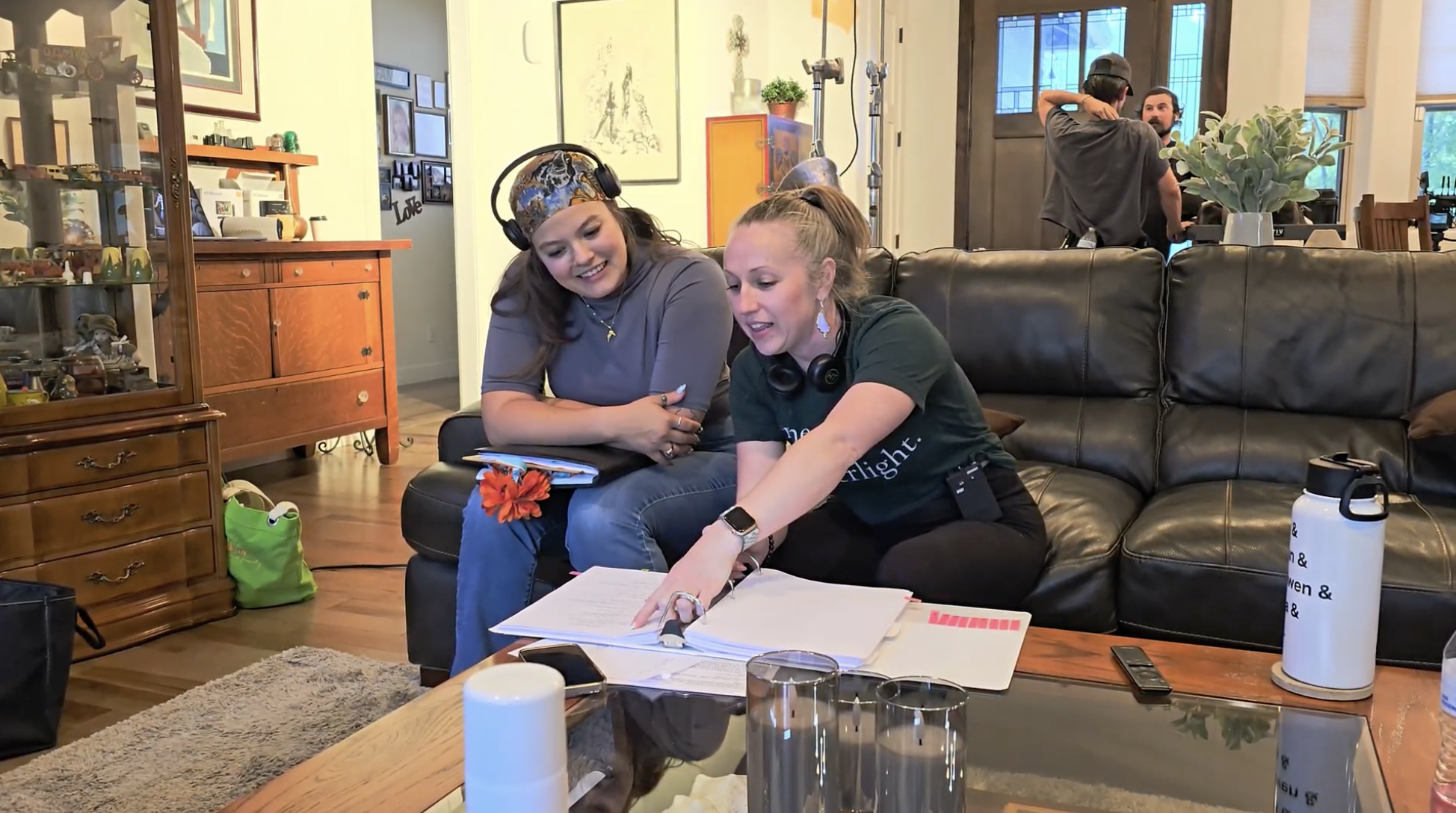
On set of Phase Three of The Christmas Witch with my go-to-girl-for-all-the-things, the talented Raven Vaelen.
When my mom Martina and I began turning The Christmas Witch into a film, I thought I knew the story inside and out. I had written it, after all. What I didn't expect was how much the adaptation would teach me… not just about screenwriting, but about the book itself, and about what I actually believed storytelling could do.
Here's what I learned.
The Script Is Not the Book. (And That's the Point.)
The first thing adaptation asks of you is this: let go.
Not of the soul of the story. Never that. But of the attachment to how the story was told the first time.
As a screenwriter, I've learned not to cling too tightly to the page. In film, story always comes first — even if that means changing locations, cutting dialogue, or pivoting in ways you never saw coming when you were writing prose. I had to hold the book loosely in one hand and the screenplay in the other, and trust that honoring the spirit of The Christmas Witch mattered more than preserving it line by line.
That said? Letting go is easier said than done when it's your world.
The Hardest Thing to Leave Behind
If I'm being honest, one of the most bittersweet parts of adapting The Christmas Witch was knowing that the film — at least in its current form — wouldn't be able to show all of Amberlight Valley the way the book does.
(Spoiler ahead for those who haven't read the book yet — skip to the next section if you want to stay unspoiled.)
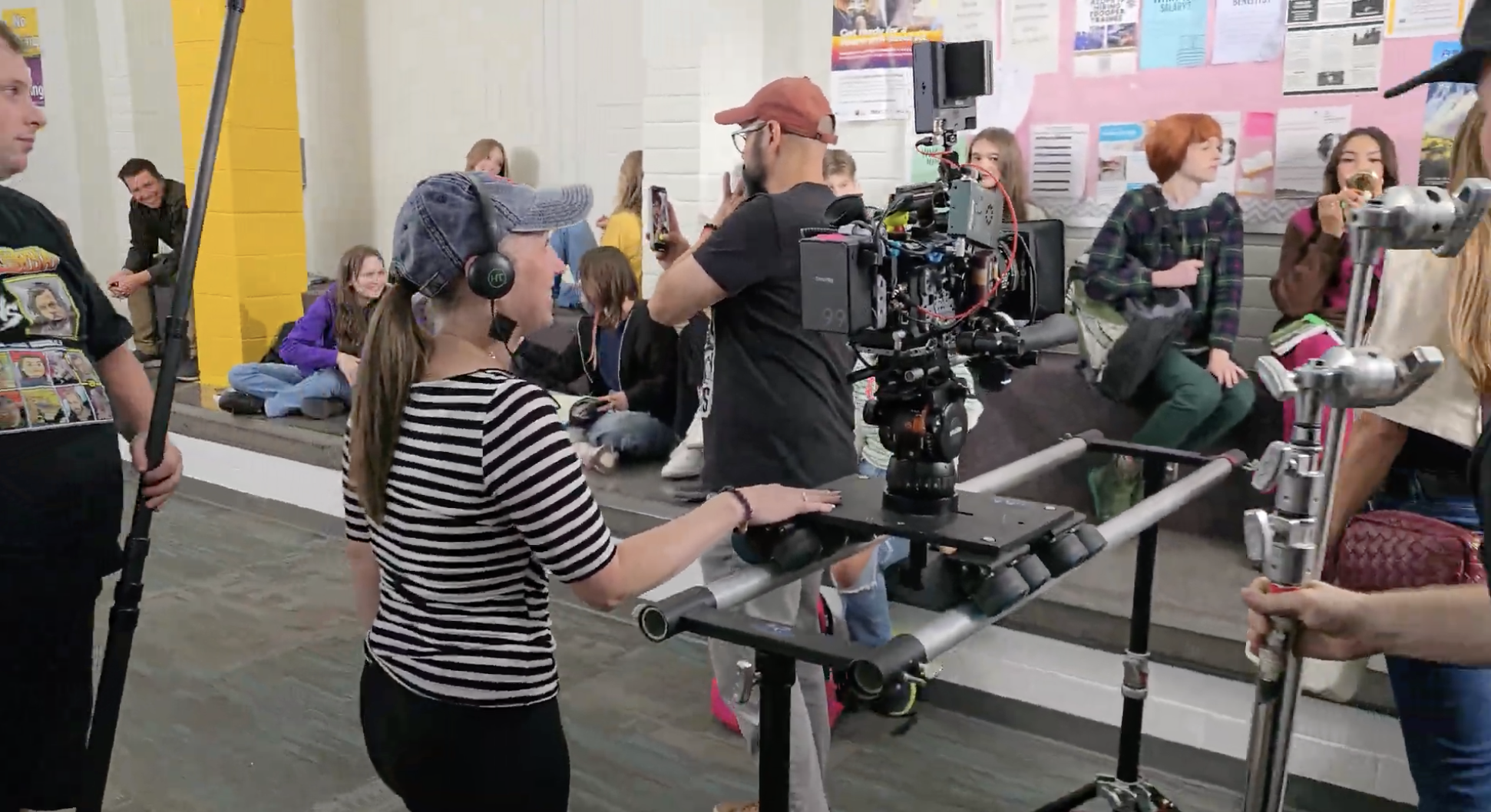
Behind the scenes of Phase Three of The Christmas Witch at Blue Ridge High School (aka Amberlight Valley Middle School).
Befana's funeral. That scene lives in the book with such quiet weight. It's one of those moments where the world of Amberlight Valley opens up and you feel just how much history and love and grief is woven into this place and these people. On the page, I could take my time with it. I could let it breathe.
On screen, pacing is everything. And while I made choices I believe in, I still feel the tenderness of what didn't make it — the fuller, deeper version of that goodbye that lives only in the novel.
It reminded me that a book and a film are not competing versions of the same thing. They're different vessels for the same soul. What one can hold, the other sometimes cannot. And that's okay. That's actually the beauty of storytelling across forms.
When Crossing Out Dialogue Became Its Own Kind of Magic
One of the most unexpected gifts of the adaptation process was discovering how much I love visual storytelling. There were scenes — longer scenes with rich dialogue — that I found myself rereading and thinking: what if we didn't say any of this? What if instead, we let the images carry it? What if a look, a gesture, a shift in the light did what three paragraphs of conversation were trying to do?
That became one of my favorite parts of writing the screenplay: turning longer scenes into montages, stripping away words to find the feeling underneath, and learning to trust the vibes… the atmosphere, the texture, the visual language of Amberlight Valley, to do the emotional heavy lifting.
I remember sitting at my desk, crossing out dialogue and feeling, for the first time, like I was thinking like a director, not just a writer. And I actually enjoy it. I enjoy finding new ways to let a story unfold when the camera is watching instead of a reader's imagination. It's its own kind of puzzle, and one that lights something up in me.
The Aha Moment That Changed the Script
There was one realization during the writing process that reshaped a significant portion of the screenplay, and it came from asking a simple question: how will this feel to watch?
In the book, Brigid and Morgan have a series of magick lessons… multiple sessions that build on each other and deepen over time. On the page, that rhythm works beautifully. You're inside Brigid's head, feeling her grow, her confusion and delight unfolding across pages.
But when I started imagining those lessons on screen, I hit a wall.
Multiple lessons, shown sequentially, in a visual medium? They were going to feel repetitive. The magic — both literal and cinematic — would flatten. What made them feel meaningful on the page would actually undercut the excitement on screen. That was one of those genuine aha moments.
I knew we needed a larger structural shift. The lessons had to be reimagined… condensed, transformed, given a different shape entirely that served the film rather than mirroring the book.
It wasn't a loss. It was a discovery. The kind of discovery that only happens when you're brave enough to say: this was right for the novel, and something else will be right for the film.
What Adapting My Own Work Taught Me About the Book
Here's the thing nobody tells you: adapting your own novel will show you things about your story you didn't know were there.
When you have to translate a world into purely visual terms, you start seeing which elements are load-bearing and which ones you were using as scaffolding. You learn what your story is actually about underneath all the beautiful words.
For me, The Christmas Witch at its core is about grief and belonging and the kind of magic that lives in found family. I knew that when I wrote the book. But I felt it more deeply when I had to strip away everything that couldn't fit on screen and find what remained.
What remained was the heart.
And from the heart, we built the screenplay.
For the Authors Who Are Wondering
If you've written a book and you're curious about adapting it — whether for yourself, for a short film, for a full feature, for anything — here's what I want you to know:
You will grieve some things. That's okay. Let yourself feel it.
You will discover new things. That's also okay. Let yourself be surprised.
The story will survive the translation… not because you preserved every piece of it, but because you understood it well enough to know which pieces were the soul of it. Adaptation isn't betrayal. It's a different kind of love letter to the world you built.
And for those of you following The Christmas Witch movie journey: everything we've let go of, we've let go of in service of something that will feel like coming home. That's the goal. That's always been the goal.
✨ Want to follow along as The Christmas Witch comes to life on screen? Get on the list for updates, behind-the-scenes glimpses, and a little Amberlight Valley magic in your inbox.
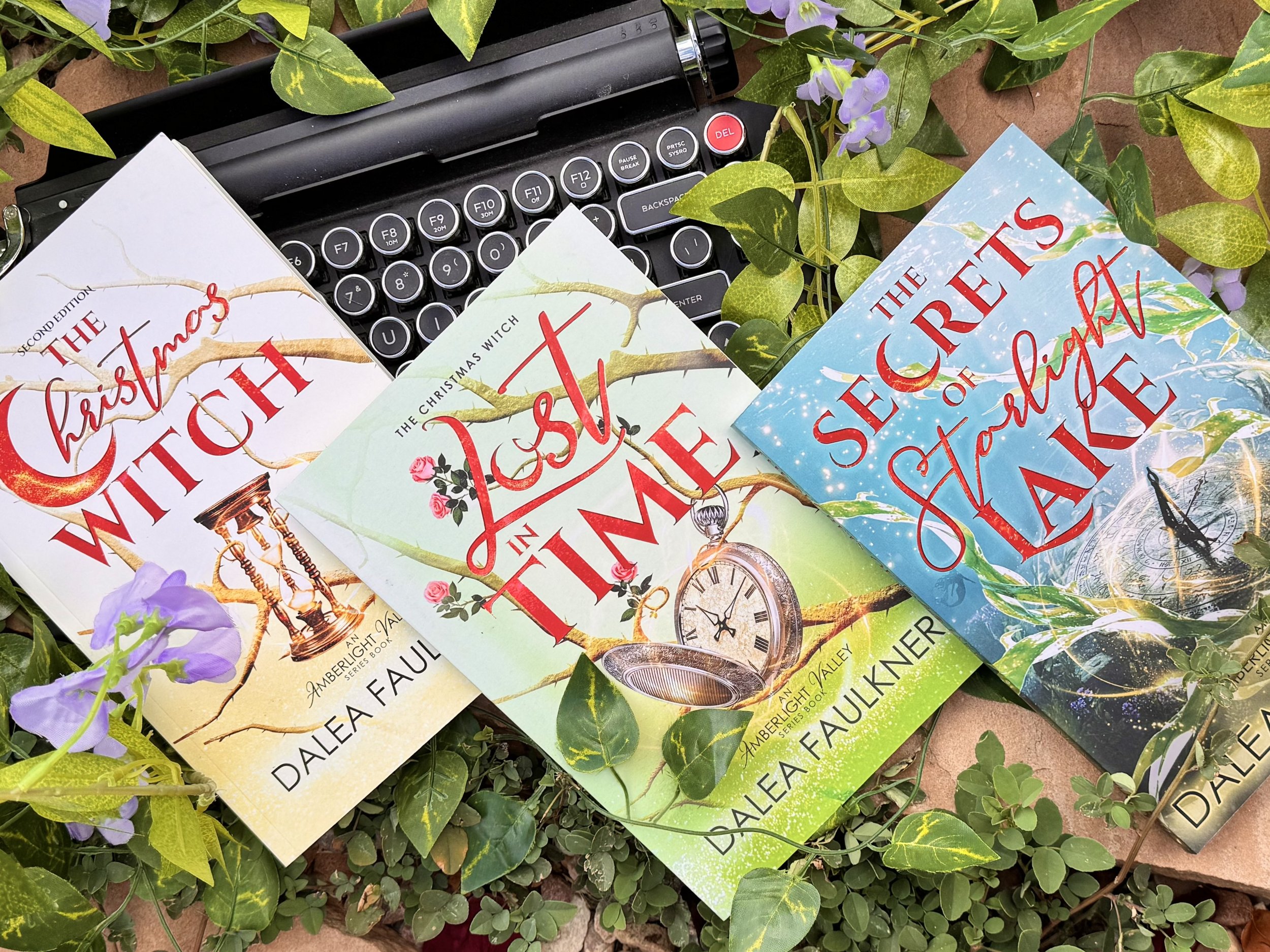
Dalea Faulkner is an author, filmmaker, and creative living in the White Mountains of Arizona. Her novel The Secrets of Starlight Lake is available now. Her world is always, in some way, the mountains.

🕯️ Wander into Amberlight and beyond—sign up for updates, secrets, and the occasional enchanted surprise.